Search

(SCTP) Diploma in Infocomm Technology – Infrastructure and Operations)

Master IT Infrastructure and Operations with this Diploma programme and forge your path into a career in IT.
  • Programme
  • Modules
  • Reviews (3)
  • Course Fee and Funding Details
  • FAQs
  • Intake Dates

Programme Info

The Diploma in IT Infrastructure and Operations (IIO) program is designed to provide advanced knowledge and practical skills for managing and optimising IT infrastructure.

Comprising eight modules, including a capstone project, the program covers a wide range of topics such as IT operations management, networking fundamentals, server administration, cloud computing, cybersecurity, project management, infrastructure automation, and disaster recovery planning.

Participants will gain expertise in enterprise architecture, infrastructure planning, security assessments, and IT project management. Through hands-on lab sessions, group discussions, case studies, and problem-based learning, participants will develop the skills necessary to lead and innovate in IT infrastructure and operations. Upon completion, participants will be equipped to conduct vulnerability assessments, design resilient IT infrastructures, and manage complex IT projects effectively.

Enrolment Requirement:

To apply for the Diploma in Infocomm Technology (Infrastructure and Operations) Programme, you should possess one of the following qualifications or meet one of these criteria:

  • Advanced Certificate in IT Infrastructure and Operations; OR
  • Mature candidates (≥ 30 years old with 8 years of work experience in a related field, including providing evidence of employment in their CVs); or
  • Candidates with other qualifications will be considered on a case-by-case basis

Basic computer literacy and an advanced understanding of IT Infrastructure and Operations concepts are required.

All Applicants will go through pre-enrolment screening process.

Application Documents Required:

  • Latest resume
  • Highest qualification certificate and/or academic transcript

These documents will be reviewed as part of the screening process.

Assessment Method:
Written assessment (i.e., Short Questions & Answers & Case study) & Individual Project Assignment.

Why Learn With Us?

  • Training led by practitioners with experience in the industryTraining led by practitioners with experience in the industry

  • Comprehensive, up-to-date curriculum and coursewareComprehensive, up-to-date curriculum and courseware

  • Real-world hands-on projectsReal-world hands-on projects
  • Career advisory and resources support Career advisory and resources support
  • Learning Unit 1: Explaining Network Topologies
  • Learning Unit 2: Supporting Cabling and Physical Installations
  • Learning Unit 3: Configuring Interfaces and Switches
  • Learning Unit 4: Configuring Network Addressing
  • Learning Unit 5: Configuring Routing and Advanced Switching
  • Learning Unit 6: Implementing Network Services
  • Learning Unit 7: Explaining Application Services
  • Learning Unit 8: Supporting Network Management
  • Learning Unit 9: Explaining Network Security Concepts
  • Learning Unit 10: Applying Network Security Features
  • Learning Unit 11: Supporting Network Security Design
  • Learning Unit 12: Configuring Wireless Networks
  • Learning Unit 13: Comparing Remote Access Methods
  • Learning Unit 14: Summarizing Cloud Concepts

By the end of this course, you should be able to:

  • Explain common network types and characteristics, and compare the functions of each OSI model layer.
  • Configure a basic SOHO network and apply CompTIA’s troubleshooting methodology to diagnose and resolve connectivity issues.
  • Summarize Ethernet standards and differentiate copper vs. fiber-optic cabling and connector types.
  • Plan rack-based physical installations for server rooms/datacenters and deploy and troubleshoot Ethernet cabling.
  • Deploy networking devices and explain common network interfaces.
  • Configure common Ethernet switching features and troubleshoot transceiver and switching issues.
  • Explain IPv4 and IPv6 addressing schemes and IPv4 forwarding.
  • Configure IP networks and subnets, test host IP configurations using appropriate tools, and troubleshoot IP networks and hosts.
  • Compare and contrast core routing concepts, including dynamic routing principles.
  • Install and troubleshoot routers, and explain tiered switching architecture and VLAN implementation.
  • Compare and contrast transport protocols and use command-line tools to scan and validate network ports.
  • Explain network addressing and name resolution services, and configure and troubleshoot DHCP and DNS.
  • Explain the importance of time synchronization and the role of NTP, and describe common network services (web, file/print, database, email, and voice).
  • Explain how high availability is provisioned using redundancy and load balancing.
  • Explain the purpose of configuration and change management documentation, and use discovery/monitoring and event management tools to identify assets and maintain network availability.
  • Use packet analysis and traffic metrics to troubleshoot network performance issues.
  • Explain common security concepts, including how to distinguish risk, vulnerability, threat, and exploit.
  • Summarize common attack types and their network impact, and explain the importance of audits and regulatory compliance.
  • Explain identity and access management concepts and differentiate authentication and directory management protocols/standards.
  • Implement defense-in-depth controls by enforcing device compliance and applying security rules (e.g., ACLs and content filtering) to manage network traffic.
  • Explain the importance of network segmentation, including the use of trusted and untrusted zones.
  • Describe the security implications of IoT/IIoT and explain the importance of physical security controls.
  • Summarize key wireless standards and capabilities.
  • Install, configure, and troubleshoot secure wireless networks.
  • Summarize WAN provider and Internet access types for enterprise connectivity.
  • Compare and contrast VPN topologies and protocols, and explain remote host access and management methods.
  • Explain data center and storage network architectures and summarize core cloud concepts.
  • Summarize how software, coding/automation, and Zero Trust principles are applied in modern network environments.
  • Learning Unit 1: Introduction on Enterprise Architecture
  • Learning Unit 2: Enterprise Architecture Cyclical Process (EACP) in depth
  • Learning Unit 3: Design and Tools
  • Learning Unit 4: Architecture Governance

Upon completion of this course, trainees should be able to demonstrate their skills and knowledge to:

  • Discuss the key aspects of the Enterprise Architecture framework, covering a comprehensive overview of the Enterprise Architecture standard, the core principles of Enterprise Architecture, the architecture framework’s layout.
  • Discuss how to transition from the Foundation Architecture to a tailored architecture specific to an organisation.
  • Discuss how to leverage the elements of the Foundation Architecture and other relevant architecture components and building blocks within the Enterprise Architecture Cyclical Process (EACP).
  • Describe the tools, methods, techniques and architecture repositories in constructing an Enterprise Architecture.
  • Examine the importance of governance within the EACP process and its relevance in various aspects of the Architecture process.
  • Discuss the process of dispensation via the Architecture Board and major stakeholder.
  • Learning Unit 1: Introduction to IT Infrastructure Planning
  • Learning Unit 2: Infrastructure Design and Architecture
  • Learning Unit 3: Virtualisation and Cloud Infrastructure
  • Learning Unit 4: IT Infrastructure Security and Compliance
  • Learning Unit 5: Service Management
  • Learning Unit 6: Performance Optimisation and Monitoring
  • Learning Unit 7: Infrastructure Documentation and Communication

Upon completion of this course, trainees should be able to:

  • Articulate the components of infrastructure planning, including analysing stakeholder requirements and strategically developing IT infrastructure within an organisational context.
  • Design robust and scalable IT infrastructures that reliably meet performance expectations by selecting appropriate architectures for servers, networks, storage, and data backup/recovery methods.
  • Apply knowledge of virtualisation and cloud technologies to select appropriate cloud service models and deploy infrastructure effectively in cloud-based projects.
  • Evaluate the IT security policies, authentication, and authorisation mechanisms in identity and access management to address threats and vulnerabilities, including fulfilling the regulatory and audit compliance requirements.
  • Discuss key IT service delivery frameworks and methodologies, including ITIL and COBIT, change management, and release practices, enabling them to manage SLAs effectively for enhanced organisational efficiency and customer satisfaction.
  • Enhance system or network efficiency and responsiveness by identifying and mitigating performance bottlenecks, implementing monitoring solutions, and utilising performance metrics to proactively address potential issues in a high-performance IT environment.
  • Document and communicate complex infrastructure designs effectively, including capturing system architecture, configuration, and operational procedures to convey technical information clearly within cross-functional teams.
  • Learning Unit 1: Business Continuity Planning
  • Learning Unit 2: IT Disaster Recovery Planning

Upon completion of this course, trainees should be able to demonstrate their skills and knowledge to:

  • Comprehend the significance of business continuity.
  • Discuss the key components and steps in creating a Business Continuity Plan.
  • Conduct risk assessments and business impact analyses through hands-on practice.
  • Prepare an adaptable Business Continuity Plan.
  • Analyse the impact of technology on business continuity and disaster recovery planning.
  • Comprehend and integrate the considerations for Disaster Recovery Planning with Business Continuity Planning.
  • Discuss the international standards and best practices in Business Continuity and
    Disaster Recovery planning.
  • Comprehend compliance and regulatory requirements.
  • Learning Unit 1: Cyber Security Concepts
  • Learning Unit 2: Architecture and Design
  • Learning Unit 3: Threats, Attacks and Vulnerabilities
  • Learning Unit 4: Cyber Security Attack Indicators
  • Learning Unit 5: Security Assessments and Penetration Testing

Upon completion of this course, trainees should be able to demonstrate their skills and knowledge to:

  • Analyse both the basic elements and broader aspects of information security and cybersecurity.
  • Analyse security control, access control, authentication methods and factors to identify and assess their effectiveness.
  • Discuss key frameworks employed in security, analyse security policies, regulations, standards, and applicable legislation to ensure compliance and robust protection measures.
  • Analyse the enterprise security architecture.
  • Analyse the virtualisation and cloud security.
  • Analyse various threat vectors and the corresponding intelligence and research sources to differentiate and understand their implications.
  • Analyse various security concerns associated with vulnerabilities.
  • Evaluate the types of attacks associated with social engineering.
  • Analyse and contrast the different types of potential indicators to determine the type of attack methods.
  • Investigate threat hunting practices and vulnerability scans to comprehensively analyse their details and implications.
  • Analyse and examine penetrating testing concepts.
  • Describe essential terminology, ethical hacking principles, and hacker classifications to understand the ethical hacking landscape.
  • Examine the five stages of ethical hacking and the terminology of the Cyber Kill Chain methodology.
  • Learning Unit 1: Introduction to Project Management
  • Learning Unit 2: Project Integration Management
  • Learning Unit 3: Project Scope Management
  • Learning Unit 4: Project Schedule Management
  • Learning Unit 5: Project Risk Management
  • Learning Unit 6: Type of project management methodologies

Upon completion of this course, trainees should be able to demonstrate their skills and knowledge to:

  • Discuss key elements of the project management framework, including identifying the project stakeholders, common tools and techniques, and defining project success.
  • Discuss the role of project managers.
  • Outline the framework for project integration management, including the creation of a project charter to initiate projects formally and the development of Project
    Management Plans, emphasising their content and formulation methods.
  • Explain how project execution relates to planning, the process of monitoring and controlling a project, and the significance of developing and adhering to robust procedures for project closure.
  • Detail the process of planning scope management and the methods for collecting and documenting requirements.
  • Explain the process of developing a Work Breakdown Structure (WBS) and the importance of controlling project scope.
  • Outline the process of planning schedule management and defining activities essential for developing project schedules.
  • Demonstrate the use of tools for activity duration planning and the application of Gantt charts for schedule planning and tracking updates.
  • Describe the concept of risk in project management, including the process of identifying risks, and the creation of a risk register and risk report.
  • Discuss qualitative risk analysis and how to calculate them.
  • Discuss the methodologies for monitoring project risks and addressing them through various risk response strategies.
  • Evaluate the three methodologies by discussing their purposes and comparing their advantages.
  • Learning Unit 1: Introduction to IT infrastructure Automation and Orchestration
  • Learning Unit 2: Command-line Shell and PowerShell scripting language
  • Learning Unit 3: Infrastructure as Code Fundamentals
  • Learning Unit 4: Automation via PowerShell, ARM Templates and Azure Blueprints
  • Learning Unit 5: Configuration management via PowerShell Desired State Configuration (DSC)

Upon completion of this course, trainees should be able to demonstrate their skills and knowledge to:

  • Articulate the Infrastructure as Code (IaC) concept and differentiate between orchestration and automation, including assessing the benefits and challenges associated with IaC.
  • Apply the essential skills in writing and executing PowerShell scripts to be used for On-Premise or Cloud environments.
  • Setup the environment to enable IaC implementations.
  • Manage automation through ARM templates and Azure Blueprints.
  • Configure automation through Desired State Configuration on supported Windows Machines.

The Capstone Project module comprises five learning units that aim to equip the trainees with the essential skills and knowledge to conduct a thorough vulnerability assessment and penetration testing for a designated small business or organisation.


  • Capstone Project Overview
  • Legal and ethical implications of cybersecurity practices
  • Hands-on Cybersecurity Tools and Techniques
  • Capstone Project Documentation
  • Capstone Project final Presentation
  • Student Review

    Pleasant and friendly trainers to guide you in a learning environment. Receptionist is helpful in understanding the type of course one needs and helpful in assisting on the necessary link up for the correct class.

  • Student Review

    The venue is pleasant and provides a good coffee machine with some aromatic coffee such as mocha, cappuccino etc. Reception staff are very helpful and friendly. The trainers whom I have encountered are very proficient in their topics. They are also friendly supporters in facilitating our learning process.

  • Student Review

    A great training centre to upgrade, learn and enroll in SkillsFuture courses. Great trainers!

Self Sponsored Students

  • Course
  • SCTP

What is covered in the Diploma in Infocomm Technology (Infrastructure & Operations) course?

This Diploma equips you with the foundational knowledge and practical skills needed for a career in IT. You’ll gain a solid understanding of IT infrastructure functions, IT operations management, networking fundamentals, server and system administration, storage and data management, cloud computing, and IT service management (ITSM).

Who is the Diploma in Infocomm Technology (Infrastructure & Operations) course for?

This diploma is ideal for individuals who have completed our Certificate and Advanced Certificate in Infocomm Technology (Infrastructure & Operations) or have prior experience or foundational knowledge in IT infrastructure and operations.

This course is ideal for individuals who want to launch a career in IT infrastructure and operations. It’s also suitable for those looking to enhance their existing IT knowledge and skills to advance their careers in this field.

Is there a hands-on component in the Diploma in Infocomm Technology (Infrastructure & Operations) course?

Yes, the Diploma includes hands-on activities and a Capstone Project at the end of this course. This is to solidify your understanding of the concepts and allow you to practice your newly acquired skills in real-world scenarios.

What career opportunities can this Diploma in Infocomm Technology (Infrastructure & Operations) course open?

This diploma qualifies you for various entry-level and mid-level IT infrastructure and operations roles, such as IT Support Specialist, Network Support Technician, System Administrator, or Help Desk Analyst.

Are there any subsidies available?

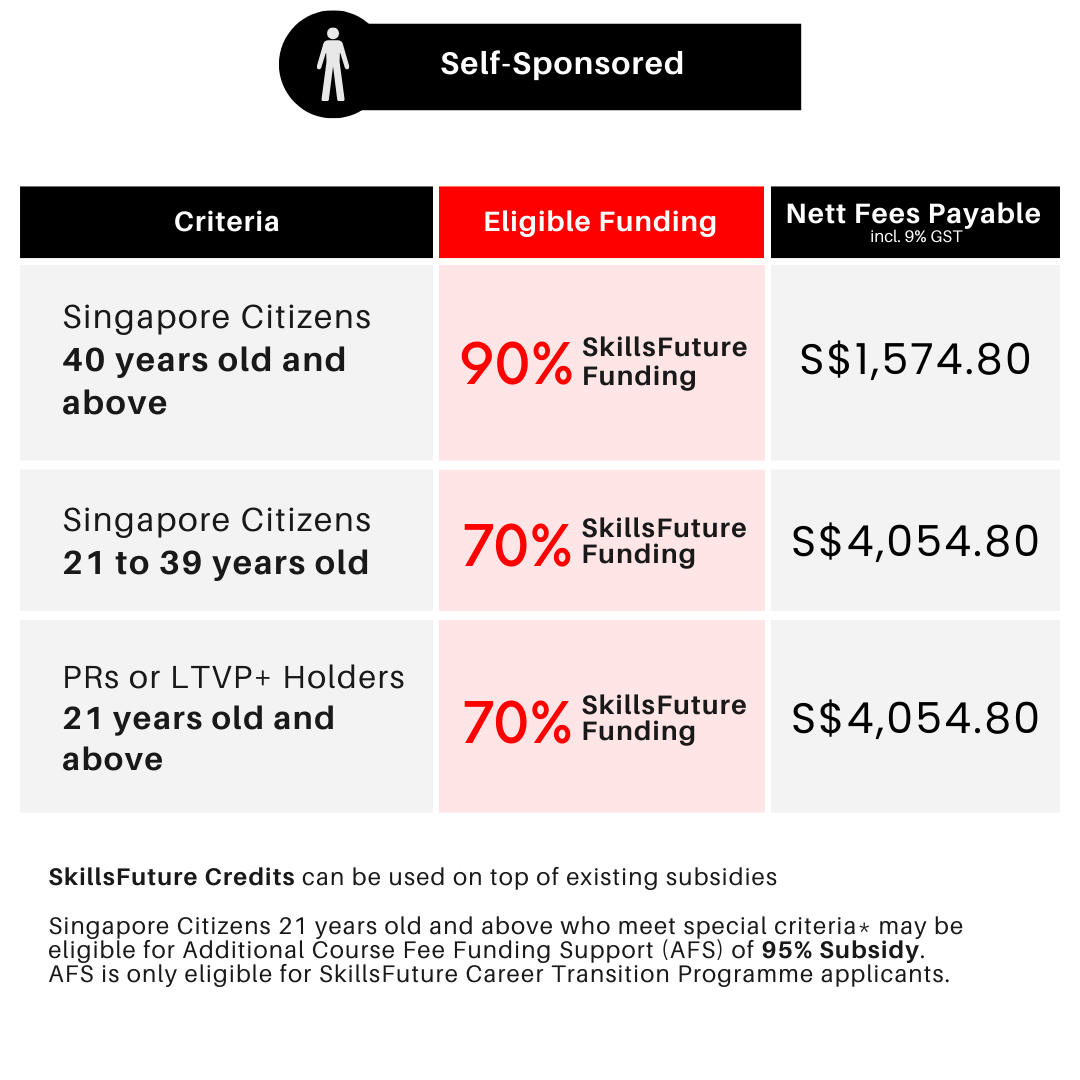
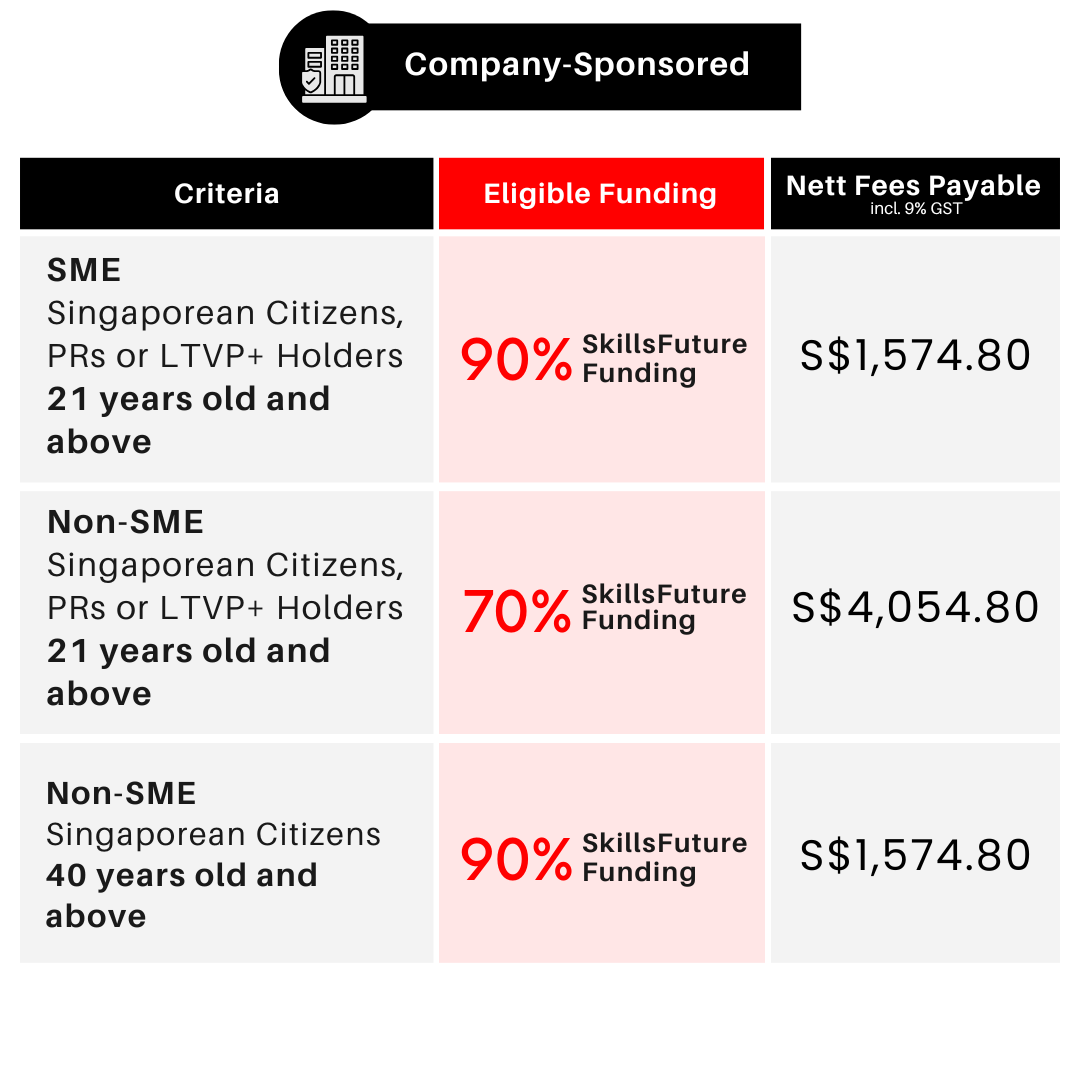
Yes, you may be eligible for up to 95% subsidies if you are Singapore Citizen, Singapore Permanent Resident, or holding a Long Term Visit Pass Plus. 

Please see the course fees and funding section above to determine your funding eligibility or get in touch with our team for further clarification.

What is the SkillsFuture Career Transition Programme (SCTP)?

The SkillsFuture Career Transition Programme (SCTP) supports mid-career individuals in acquiring industry-relevant skills to improve employability and pivot to new sectors or job roles.

You can choose to study part-time or full-time, depending on what suits you best, and the programme lasts between 3 to 12 months.

This ensures individuals like you have the opportunity to upskill or re-skill while effectively preparing for successful career transitions.

For more information on SkillsFuture Career Transition Programmes (SCTP), visit the MySkillsFuture website.

Is the SkillsFuture Career Transition Programme (SCTP) recognised in Singapore, and how can it help me advance in my career?

Yes, the SkillsFuture Career Transition Programme (SCTP) is a government initiative in Singapore designed to assist mid-career individuals in acquiring new skills and knowledge to facilitate a career transition.

This programme is geared towards individuals who wish to switch industries or occupations due to changes in the job market, technological advancements, or personal career goals.

  • December 2025
Diploma in Infocomm Technology (Infrastructure & Operations)
Fee Excluding GST $12,400.00
For Singaporeans > 21 (Excl. GST) $3,720.00
For Singaporeans > 40 (Excl. GST) $1,240.00
For Foreigners (Excl. GST) $12,400.00

Why Join Us?

Recognised Certification

Graduate with a recognised certificate

joinus08

Real Hands-on Projects

Experience real-world application through hands-on projects with real project partners

Relevant and comprehensive courseware

Learning materials are vetted by our Dean to ensure relevant and up-to-date curriculum

Personalised Mentorship

Gain one-on-one coaching by our mentors when completing your capstone project

Career Advisory & Resources Support

Personalised career advise and support to assist in your job search

Expert-led Training

Trainers are hand-picked industry experts who are certified trainers, offering real-world insights


Meet Your Trainers

Learn Digital Marketing live from industry experts for real-world insights
techar
Jeff Bezos
CEO, Amazon

Bachelor's of Computing in Information System National University of Singapore

techar
Jeff Bezos
CEO, Amazon

Bachelor's of Computing in Information System National University of Singapore

techar
Jeff Bezos
CEO, Amazon

Bachelor's of Computing in Information System National University of Singapore
techar
Jeff Bezos
CEO, Amazon

Bachelor's of Computing in Information System National University of Singapore

Listen to What Some of Our Graduates Have To Say

Are you ready to kickstart your career?

If you’re thinking about taking your next step but are still unsure of which programme suits your needs best, our programme consultants are available to guide you through your learning journey.

Speak to us now to find out more!


    women on the phone

    Grant Calculator

    Download Programme Brochure

    brochure-img